Last updated
Home Insurance Cost for Expats in Europe: Tenants, Homeowners, Flood Risk, and Liability
Direct answer
Home Insurance Cost for Expats in Europe: Tenants, Homeowners, Flood Risk, and Liability is for new residents, tenants, owners, and relocating families who need to turn a broad search result into a concrete decision. It explains checking rent, accommodation evidence, property costs, insurance, contracts, and payment risk across Europe, then shows how to check documents, deposits, insurance, ownership or tenancy terms, payment timing, and the authority or counterparty that controls the result. The later sections connect start with the occupancy role, tenant obligations vary by country, and the coverage stack so the next step is easier to judge. Read it before paying fees, submitting forms, signing contracts, booking travel, or relying on a generic summary.
The answer changes when you are a tenant, owner-occupier, landlord, or apartment owner, and it also changes by country and flood or weather exposure. In some markets the landlord mainly wants a certificate; in others the real risk is being underinsured for water damage, civil liability, or rebuilding cost.
Next step: list your occupancy role, address, rebuild or contents value, and any lease or mortgage insurance requirement, then compare quotes only after those inputs are fixed.
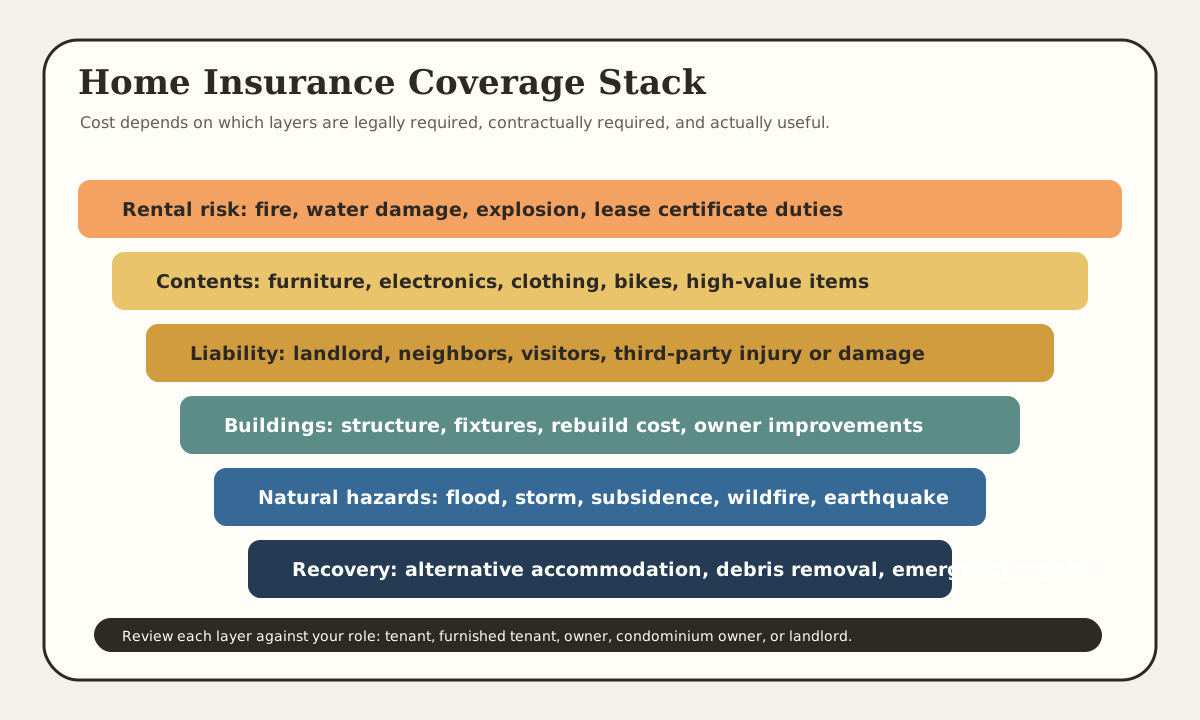
The home insurance cost for expats in Europe depends on legal status, tenancy type, property value, location risk, flood exposure, liability needs, contents value, deductible design, and whether the expat rents or owns. The cheapest policy can be unsafe if it covers only landlord damage, excludes flood, underinsures contents, or fails to provide civil-liability protection required in daily life.
This guide is written for renters, homeowners, students, remote workers, digital nomads, and foreign buyers living in Europe. It is not legal or insurance advice. It gives a practical research framework for comparing home insurance across European countries and for asking the right questions before signing a lease, buying a property, or renewing a policy.
Source check date: May 18, 2026.
Start With The Occupancy Role
Home insurance is not one product. Tenants, owner-occupiers, landlords, and condominium owners need different cover.
| Expat role | Typical cover needed | Cost drivers | Main risk if wrong |
|---|---|---|---|
| Tenant | Rental-risk liability, contents, personal liability, water/fire/explosion cover | Address, building type, contents value, deductible | Landlord demands certificate or damage is not covered |
| Furnished tenant | Tenant cover plus contents owned by landlord and personal belongings | Lease terms, inventory, furniture value | Dispute over who pays after fire or water damage |
| Owner-occupier | Buildings, contents, liability, natural hazards, alternative accommodation | Rebuild cost, construction, flood zone, security | Mortgage or loss exposure if building cover is inadequate |
| Apartment or condominium owner | Personal contents plus owner liability; building policy may sit with association | Association policy, unit improvements, deductible allocation | Assuming the master policy covers personal improvements |
| Landlord | Buildings, landlord liability, loss of rent, malicious damage, legal expenses | Tenant type, vacancy, location, rebuild cost | Ordinary owner policy may not cover rental activity |
The first review question is therefore not "How much is home insurance?" It is "Which insurable interest do I have in this property?"
Tenant Obligations Vary By Country
In some countries, tenant home insurance is legally required or functionally required by landlords. France is a clear example. Service-Public explains that tenants with a residential lease, including a mobility lease, must take out home insurance covering at least rental risks such as fire, water damage, and explosion. The tenant must provide a certificate when receiving the keys and annually on request. However, the mandatory rental-risk guarantee does not automatically cover damage to neighbors or personal belongings.
That distinction matters to expats. A policy certificate can satisfy the landlord while still leaving a major gap.
Primary references:
The Coverage Stack
A strong expat policy is assembled in layers.
| Coverage layer | What it protects | Who usually needs it | Watch point |
|---|---|---|---|
| Rental-risk liability | Damage caused to rented dwelling by fire, explosion, water damage | Tenants where required by law or lease | May not protect neighbors or belongings |
| Contents insurance | Furniture, electronics, clothes, household goods | Tenants and owners | Sum insured must match replacement value |
| Personal civil liability | Damage or injury caused to third parties | Most residents, especially families | Often separate in some markets |
| Buildings insurance | Structure, roof, walls, fixtures | Owners and mortgage borrowers | Rebuild cost is not market value |
| Natural hazards | Flood, storm, earthquake, landslide, wildfire | Owners and tenants in exposed areas | Exclusions and official catastrophe schemes vary |
| Alternative accommodation | Temporary housing after insured loss | Tenants and owners | Limits may be time-based or amount-based |
| Legal protection | Disputes with landlord, neighbor, contractor, or insurer | Optional but useful | Often has waiting periods |
| High-value items | Jewelry, bikes, musical instruments, art | Anyone with expensive items | Single-item limits and proof-of-ownership rules |
BaFin notes that home contents insurance in Germany is not a legal requirement, but consumers should make sure the agreed insured sum corresponds to the current value of household contents. That principle travels well across Europe: underinsuring contents can make a cheap policy dangerous.
Primary reference:
What Drives Home Insurance Cost
Home insurance pricing combines property-specific risk and policy design.
| Cost driver | Why it affects premium | Expat review question |
|---|---|---|
| Address and local peril risk | Flood, storm, theft, wildfire, and subsidence vary by location | Has the insurer assessed the exact address, not just city? |
| Building type | Older wiring, roof type, construction material, and apartment blocks change risk | Are renovations documented? |
| Rebuild cost | Buildings cover should reflect reconstruction cost, not purchase price | Is the sum insured indexed? |
| Contents value | More belongings and high-value items raise exposure | Are electronics, bikes, jewelry, and work equipment listed? |
| Deductible | Higher deductible lowers premium but increases claim cost | Can you afford the deductible after a loss? |
| Security | Locks, alarms, shutters, floor level, and occupancy patterns affect theft risk | Are security conditions mandatory for theft claims? |
| Occupancy | Vacancy, short-term rentals, remote work, and subletting change risk | Does the policy allow the actual use? |
| Claims history | Prior losses can raise price or reduce availability | Do you need to disclose claims from another country? |
| Liability limits | Higher third-party liability limits cost more but protect against severe losses | Are limits adequate for the country? |
For renters, the annual premium may be modest, but the financial exposure can still be large if personal liability or neighbor damage is excluded. For owners, buildings cover, flood risk, and underinsurance dominate.
Country And Contract Examples
Home insurance language is local. An expat should avoid translating a familiar policy from the home country onto a new legal system.
| Situation | What usually changes | Practical response |
|---|---|---|
| French residential tenancy | Rental-risk insurance is a tenant obligation for ordinary residential leases | Provide the certificate at key handover and annually if requested |
| German rental apartment | Contents insurance may be optional, but liability and household coverage are often practically important | Separate personal liability from contents if the market sells them separately |
| Irish home purchase | Underinsurance and rebuild-cost accuracy are major consumer issues | Estimate rebuild cost rather than relying on market price |
| Coastal or river property | Flood may be excluded, expensive, or subject to special terms | Obtain written flood wording before committing to purchase |
| Furnished short-term stay | Ordinary tenant policies may not fit tourist or serviced accommodation | Check lease status and insurer eligibility before relying on standard cover |
| Remote-work home | Business equipment and client property may be excluded | Declare work use and ask about equipment limits |
The legal trigger and the risk trigger are different. A country may not require a tenant to insure contents, yet losing a laptop, documents, and furniture can still be financially severe. A mortgage lender may require buildings insurance, yet the policy may still leave flood, vacancy, or high-value contents gaps.
Underinsurance: The Expensive Hidden Risk
Underinsurance occurs when the insured amount is below the real cost to rebuild, repair, or replace. The Central Bank of Ireland warns that if a home is under-insured, a consumer may have to pay costs from their own pocket that they expected to be covered. It also stresses that rebuild cost is different from market value.
This distinction is critical for foreign buyers. A property bought cheaply in a rural area may still be expensive to rebuild. A city apartment may have a high market value but the individual owner may only need contents and internal improvements because the building structure is covered by a condominium or association policy. The correct sum insured depends on the legal and physical arrangement, not the purchase price alone.
Primary reference:
Flood And Climate Risk
Flood, storm, wildfire, and subsidence are no longer edge cases. EIOPA's insurance protection gap dashboard tracks climate-related protection gaps for natural catastrophes across European countries. The existence of a protection gap means that economic losses can exceed insured losses, either because cover is unavailable, unaffordable, excluded, poorly understood, or not purchased.
For an expat, the practical issue is simple: do not assume "home insurance" includes flood or every natural hazard. Ask for written confirmation.
| Risk question | Why it matters |
|---|---|
| Is flood included, optional, or excluded? | Flood exclusions can affect mortgage completion and resale |
| Is storm surge treated differently from river flood? | Definitions affect coastal and river properties |
| Are basements, garages, and outbuildings covered? | Losses often occur in lower levels first |
| Is there a government natural-catastrophe scheme? | Some countries use public-private mechanisms |
| Does the policy require mitigation? | Barriers, alarms, or maintenance may be claim conditions |
| Are alternative accommodation and debris removal covered? | Recovery costs can exceed contents losses |
Primary reference:
Tenant Cost Model
Renters should compare the certificate required by the landlord with the protection actually needed.
| Tenant item | Minimum version | Safer version |
|---|---|---|
| Landlord certificate | Rental-risk cover only | Rental-risk plus neighbor and third-party liability |
| Contents | None or low default amount | Replacement-cost contents matched to inventory |
| Deductible | Low premium with high deductible | Deductible you can pay immediately |
| Water damage | Basic named-peril language | Includes escape of water, appliances, and tenant negligence where available |
| Theft | Only forced entry | Includes bicycle, storage room, and temporary accommodation if needed |
| Work equipment | Often excluded | Declared if remote work is material |
| Subletting | Often restricted | Written permission and policy endorsement |
If you rent furnished accommodation, photograph the inventory at move-in, store the lease and insurance certificate, and clarify whether the landlord's furniture is insured by the landlord, your tenant policy, or neither.
Claims Process And Evidence Discipline
Expats often struggle with claims because evidence is scattered across languages, devices, landlords, banks, and moving records. A claim file should be built before anything goes wrong.
| Evidence | Why it helps |
|---|---|
| Move-in inventory and photos | Proves condition and ownership disputes |
| Receipts and serial numbers | Supports contents valuation and theft claims |
| Lease and insurance certificate | Shows who had which obligation |
| Policy schedule and exclusions | Prevents relying on marketing summaries |
| Emergency repair invoices | Supports reimbursement after water or storm damage |
| Police report for theft or vandalism | Often required by policy terms |
| Landlord or building-manager correspondence | Documents notification timing |
| Photos of damage before cleanup | Preserves causation evidence |
After a loss, the order matters: prevent further damage if safe, notify emergency services if necessary, document the scene, contact the insurer within the policy deadline, and avoid admitting liability before understanding the facts. For water damage in apartment blocks, notify neighbors, landlord, building manager, and insurer quickly because liability can cross unit boundaries.
Owner Cost Model
Owners need to separate mortgage compliance from true protection. A lender may require buildings insurance, but lender acceptance does not prove that the policy covers every risk the owner cares about.
| Owner item | Review question |
|---|---|
| Rebuild cost | Has a professional or recognized calculator estimated reconstruction cost? |
| Indexation | Does the insured amount update for construction inflation? |
| Natural hazards | Are flood, storm, earthquake, landslide, wildfire, and subsidence included? |
| Fixtures and improvements | Are kitchens, bathrooms, flooring, and energy upgrades covered? |
| Alternative accommodation | How long and how much is covered if the home is uninhabitable? |
| Liability | Does the policy cover injury to visitors, neighbors, or third parties? |
| Vacancy | How many days can the property be empty before restrictions apply? |
| Rental activity | Are long-term rental, short-term rental, or home exchange allowed? |
Foreign buyers should also check whether the notary, lender, condominium association, or local law imposes specific insurance duties.
How To Compare Quotes
Use a consistent grid. Do not compare a stripped-down tenant certificate with a multi-risk policy.
| Quote field | Policy A | Policy B | Policy C |
|---|---|---|---|
| Annual premium | |||
| Deductible | |||
| Contents sum insured | |||
| Buildings sum insured | |||
| Personal liability limit | |||
| Flood included | |||
| Theft conditions | |||
| Alternative accommodation | |||
| High-value item limit | |||
| Exclusions that matter | |||
| Cancellation and renewal terms |
The best quote is the one that covers the actual legal and physical risk at a premium you can renew, not the one with the lowest headline price.
Renewal, Cancellation, And Moving Country
Home insurance is usually tied to a specific address. Expats move more often than local households, so renewal and cancellation terms matter. A policy may need to be cancelled when a lease ends, transferred to a new address, adjusted after a move from furnished to unfurnished housing, or changed when the insured starts subletting.
| Life event | Policy action |
|---|---|
| Moving to a new apartment | Do not assume automatic transfer; ask for new address underwriting |
| Buying after renting | Add buildings cover and review mortgage requirements |
| Leaving property vacant | Check vacancy limits before departure |
| Taking in a roommate | Confirm household-member and liability wording |
| Subletting | Get written permission from landlord and insurer |
| Renovating | Notify insurer before structural or electrical work |
| Installing solar panels or heat pumps | Confirm they are included in buildings or contents cover |
| Returning to home country | Cancel only after lease or ownership risk ends |
Premium is only one renewal variable. Exclusions, deductibles, sums insured, indexation, and claims conditions can change. Read renewal documents rather than auto-renewing from memory.
Frequently Asked Questions
Is home insurance mandatory for expats in Europe?
Sometimes. It depends on country, lease type, ownership structure, mortgage terms, and local law. France requires residential tenants to carry at least rental-risk cover. Other countries may rely more on lease requirements or mortgage conditions.
Is contents insurance enough for a tenant?
Not always. Contents cover protects belongings. A tenant may also need rental-risk liability, neighbor liability, and personal civil liability.
Does a landlord's policy cover my belongings?
Usually no. A landlord policy typically protects the landlord's building or property interest, not the tenant's personal property.
Should homeowners insure for purchase price?
No. Buildings insurance should usually reflect rebuild or reinstatement cost, not market value. The Central Bank of Ireland specifically distinguishes rebuild cost from market value in its underinsurance guidance.
Why does flood risk affect availability, not just price?
In high-risk areas, insurers may exclude flood, impose high deductibles, or decline cover. That can affect mortgage approval and resale because lenders often require buildings insurance.
What should digital nomads check?
Check whether the policy covers temporary accommodation, work equipment, frequent moves, subletting, and residence outside the country. A standard tenant policy may assume stable occupancy at one address.
Final Checklist
| Before signing or renewing | Evidence to keep |
|---|---|
| Confirm whether insurance is legally or contractually required | Lease, mortgage offer, association rules |
| Identify your role: tenant, owner, landlord, condominium owner | Contract, deed, tenancy agreement |
| Set contents and rebuild values realistically | Inventory, photos, receipts, rebuild estimate |
| Check flood and natural hazard wording | Policy schedule and exclusions |
| Confirm liability limits | Policy certificate and general terms |
| Verify deductible and claim process | Schedule, claim guide, emergency numbers |
| Disclose remote work, vacancy, subletting, or high-value items | Written insurer confirmation |
First-Month Home Insurance Workflow
The first month in a new home is when most avoidable insurance errors happen. Expats are often managing registration, banking, utilities, school, work, and furniture delivery at the same time. Use a simple workflow.
| Timing | Action | Evidence |
|---|---|---|
| Before signing lease or purchase | Identify whether insurance is legally or contractually required | Lease, mortgage, notary, agency email |
| Before key handover | Obtain required certificate | Policy certificate and payment proof |
| Move-in day | Photograph rooms, meters, locks, appliances, windows, and damage | Timestamped photos and inventory |
| First week | Register utilities and confirm insured address | Utility contracts and policy schedule |
| First month | Build contents inventory | Receipts, serial numbers, photos |
| After furnishing | Update contents value | Revised insured sum if needed |
| Before travel | Check vacancy and security conditions | Policy wording and insurer confirmation |
This workflow is especially important in furnished rentals. If furniture belongs to the landlord, check whether tenant liability covers damage to property in your care. If work equipment belongs to an employer, confirm whether the home policy, employer policy, or separate equipment cover applies.
Claims Readiness
Insurance is tested during a claim, not during quote comparison. Before a problem happens, know what to do.
| Claim scenario | Immediate action |
|---|---|
| Water leak | Stop source if safe, notify landlord/building manager, photograph damage |
| Theft | File police report, preserve evidence, list stolen items |
| Fire or smoke damage | Contact emergency services, insurer, landlord, and temporary housing support |
| Storm or flood | Photograph entry point, protect property if safe, check natural-hazard wording |
| Liability incident | Do not admit liability prematurely; notify insurer with facts |
| Broken glass or appliance | Check whether the item is contents, building, landlord, or warranty issue |
Keep emergency numbers offline. Many expats cannot access an app or email easily during a move, outage, theft, or phone loss.
Underinsurance and Inventory Method
Underinsurance happens when the insured value is lower than the real replacement or rebuild cost. It can reduce claim payment even when the event is covered. Build a simple inventory room by room.
| Room or category | Include |
|---|---|
| Living room | Furniture, electronics, rugs, art, lighting |
| Bedroom | Bed, wardrobe contents, jewelry limits, watches |
| Kitchen | Small appliances, tableware, cookware |
| Home office | Laptop, monitors, chair, printer, employer equipment |
| Sports and hobbies | Bicycles, instruments, camera equipment, tools |
| Storage | Basement, garage, attic, shared storage |
| Documents | Passports, residence cards, certificates, backups |
High-value items may need separate declaration. Do not assume jewelry, bicycles, musical instruments, art, or professional equipment are fully covered under a standard limit.
Country Move and Exit Checklist
When leaving a country, coordinate insurance with the legal end of the risk.
| Event | Insurance action |
|---|---|
| Lease ends | Cancel or transfer after handover, not before |
| Deposit dispute continues | Keep inventory and claim records accessible |
| Property remains furnished | Check vacancy, storage, and landlord rules |
| Furniture moves internationally | Confirm moving insurance and transit exclusions |
| Home is sublet | Obtain written permission and correct policy |
| Car or garage remains | Check separate vehicle and storage cover |
If you are moving again inside Europe, avoid duplicate gaps: one policy may end at midnight in country A while another starts after keys are collected in country B. Align dates deliberately.
Source Quality Notes
This guide uses official sources where possible because home-insurance obligations and consumer-protection risks are local. Service-Public is used for French tenant obligations and the distinction between minimum rental-risk cover and broader protection. BaFin is used for the German consumer description of home contents insurance and the need to align the insured sum with current value. The Central Bank of Ireland is used for underinsurance because it directly addresses rebuild-cost risk. EIOPA is used for climate-related protection-gap context, not to predict the premium at a specific address. The final quote must always be checked against the insurer's current policy wording.
Bottom Line
Home insurance cost for expats in Europe is best understood as a coverage-stack problem. Tenants need to satisfy lease or legal duties without leaving contents and liability gaps. Owners need rebuild-cost accuracy, natural-hazard clarity, and mortgage-compatible protection. In both cases, the cheapest policy is only useful if it covers the actual risk, at the actual address, for the actual way the home is occupied.